KIM SANGSTER / BEHIND THE PAINTING
Pessoa — Identities in Colour

An exploration of identity, personality and the power of colour to make the familiar unfamiliar.
The exhibition brief
I painted this portrait for an exhibition devoted to the Portuguese poet Fernando Pessoa at Artesis Gallery in Tavira, now known as Gallery Borboleta. It was an invitation to respond to Pessoa as an artist rather than simply reproduce a likeness.
A passage about his heteronyms — the distinct literary identities through which he wrote — caught my attention. Pessoa was not content to speak only through a single poetic voice. He invented writers with their own perspectives and styles, making identity itself part of his art. That seemed a much richer starting point for a painting than the outward appearance of the man alone.
Reading Pessoa
I bought and read The Book of Disquiet as part of my exploration. One of the ideas that stayed with me was Pessoa’s challenging distinction between the beauty of art and the practical purposes of ordinary life. His suggestion that art need not justify itself by being useful prompted me to think about the freedom painting gives us to depart from literal truth.
The more I considered his writing, the more I saw the portrait as an opportunity to represent the many facets of a personality — not just what a camera might have recorded.
Why the unexpected colours?
The portrait is tonally convincing in black and white. The underlying drawing and the relationships between light and dark are sufficient to describe the familiar face. Colour was therefore not needed to achieve recognition. I used it for another purpose entirely.
I wanted, quite literally, to add colour to life: to take a face that might look perfectly ordinary in monochrome and make it strange, vivid and perhaps more beautiful. Rather than imitate natural flesh tones, the colour becomes part of the subject. The different hues can also suggest the many distinct and colourful personalities that Pessoa brought into being through his writing.
This is an example of why I find colour theory so absorbing. Colour need not merely report what the eye sees. It can change the emotional character of an image, and invite the viewer to look again.
Many selves, one face
Pessoa’s heteronyms offer one way of considering a broader human question. We all inhabit different roles and speak in different voices according to circumstance. How much of the person is visible in a portrait — and how much remains outside the frame?
That question is also present in my painting Where We Hide, although it approaches identity through concealment and protection rather than through exuberant colour. The two works belong together, but they need not reach the same conclusion.
Another Pessoa connection: Lilies and Roses
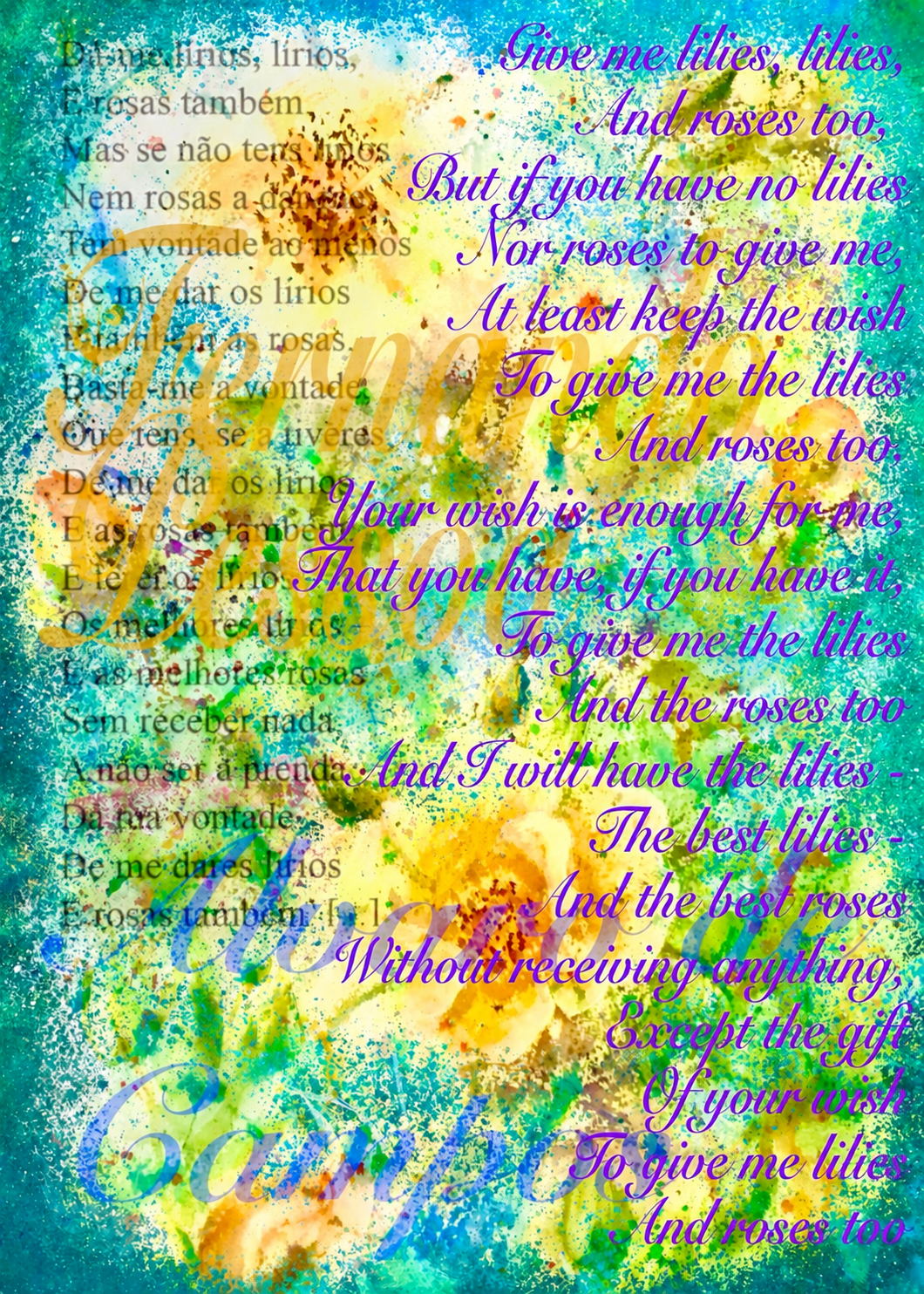
Elsewhere on the site, in my Tavira print collection, I used a poem written by Pessoa under the name Álvaro de Campos. That print, Lilies and Roses, offers another encounter with one of his literary identities — this time through text and graphic composition rather than portraiture.

Explore the Impressions collection, including Lilies and Roses · View the Lilies and Roses print